The Most Underrated Adjectives That Start With "I" – Why They Deserve More Attention
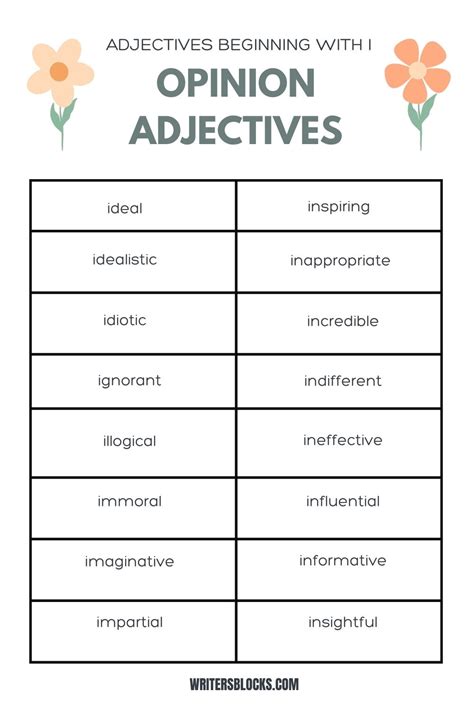
When it comes to colorful, vivid language, we often focus on adjectives like “extraordinary” or “stunning.” But some of the most powerful, subtle, and underrated descriptors begin with the simple letter “I.” Though lesser-known, these understated i-starting words pack a punch in writing, storytelling, and everyday communication — and they’re worth revisiting. In this article, we explore the most underrated adjectives beginning with “I” that can elevate your vocabulary, sharpen your prose, and surprise your audience.
Understanding the Context
1. Intrepid
Meaning bold, courageous, or willing to face danger with heart, intrepid feels both timeless and refreshingly original. Unlike bolder terms like “fearless,” it conveys resilience and calm bravery. Consider: “The intrepid explorer pressed on through the storm, trusting her instincts.” This adjective works beautifully in travel writing, memoir, or narrative nonfiction, evoking daring without hyperbole.
2. Inquisitive
Far more nuanced than just “curious,” inquisitive captures a thoughtful, persistent quest for knowledge. It reflects curiosity-driven behavior—ideal for describing a character’s intellectual drive or a scientist’s meticulous approach. For example: “Her inquisitive mind turned every observation into discovery.” This adjective adds depth and authenticity to character and storytelling.
Key Insights
3. Immaculate
Often reserved for descriptions of perfection in form or detail, immaculate goes beyond cleanliness to denote flawless precision. It shines in fashion, design, and personal storytelling: “His immaculate presentation left a lasting impression in high-stakes meetings.” It’s a strong, underused alternative to “perfect,” emphasizing attention to detail with elegance.
4. Implacable
Ko Strange yet compelling, implacable describes an unyielding force—whether emotion, weather, or destiny. It’s rarely heard in casual conversation, yet perfectly suited for evoking tension or gravity. Example: “The implacable tide rolled forward, indifferent to human effort.” Use it to convey relentless, unwavering intensity.
5. Inimical
Meaning hostile or contemptuous, yet subtly layered, inimical offers a sharp way to describe quiet antagonism or subtle opposition—ideal in political satire, drama, or conflict-driven narratives. “Their inimical words warmed the fragile truce between neighbors.” Far more nuanced than “hostile,” it deepens emotional weight.
Final Thoughts
6. Implied
More than just “suggested,” implied carries a quiet power—implying meaning beneath the surface. Perfect for moments where tension, subtext, or unspoken ideas drive a story. Example: “The implied promise lingered like an unfinished melody.” It’s a sophisticated tool for writers aiming to create layered, implied meaning.
7. Integral
While found in business reports, integral shines in personal narrative where small elements define larger truths. “Her role was integral to the project’s success—often unseen, but never overlooked.” It conveys essentiality with quiet strength, perfect for emphasizing understated contributions.
8. Impartial
More authoritative than “fair,” impartial denotes neutrality without bias—crucial in journalism, philosophy, or courtroom scenes. “The judge’s impartiality inspired confidence even when answers were elusive.” A precise and underused descriptor for trust and objectivity.
Why These Adjectives Remain Underrated
Most “i”-starting adjectives fly under the radar because they’re precise rather than flashy. They resist overuse while adding emotional nuance and sophistication. In a world saturated with superlatives like “awesome” or “incredible,” words beginning with “i” remind us that subtlety can be more powerful than exaggeration.
Final Thoughts
Next time you craft a story, write a message, or reflect on experiences, consider the underrated adjectives starting with “i.” Intrepid, inquisitive, impeccable—these words don’t shout—they suggest, provoke, and endure. Mastering them enriches your vocabulary and deepens your voice, making every sentence more memorable.